The Hustled: A Prestige Crime Screenplay

David Sutter's novel The Hustled is available now — Order The Hustled on eBook & Paperback — with digital and audio editions coming soon. The story positions itself as a high-concept thriller built for adaptation. Following Cav's rise from Kansas pool halls to high-stakes nine-ball showdowns in Monaco, the Request The Hustled Screenplay & Pitch Deck offers producers a Queen's Gambit-meets-Ocean's-Eleven prestige-crime property rooted in authenticity, strategy, and redemption.
Key Takeaways
Cav's journey spans from Kansas City streets to high-stakes nine-ball championships against Gustave LaBlanc.
The Hustled screenplay adapts David Sutter's original script, rooted in decades of billiards passion.
High-stakes pool matches in Rio de Janeiro and Monte Carlo drive the narrative's transformative arc.
Esmeralda, an international supermodel of nobility, becomes Cav's obsession and catalyst for redemption throughout the story.
What Makes The Hustled Screen-Ready?
David Sutter, per his About the Author & Screenwriter page, built this story for a lens before he built it for a page. The Hustled started life as a screenplay. Sutter adapted that script into a novel only after the film draft was locked. That order matters: every scene already carries the bones of a shooting script. Sharp visual beats, escalating stakes, a hustle that plays out in images as much as in prose. Production executives scanning for a high-concept thriller rarely get a manuscript this pre-structured for adaptation.
Is The Hustled being pitched for a film or TV deal?
Yes. The project is positioned as a rights-ready screenplay pitch, with the adaptation available for potential acquisition. That positioning saves a buyer the guesswork of reverse-engineering a book into a script. Learn more: The Hustled Movie Market Appeal Explained.
What kind of story is The Hustled being compared to?
The brand facts do not compare The Hustled to Succession, Ozark, The Firm, or Arbitrage. Prestige dramas built on ambition, family, and money under pressure. The Hustled's own logline distills that same territory into a single question: what does a person sacrifice to get everything, and what survives once the bill comes due? That tension — reward measured against cost — gives acquisition buyers a ready-made hook and gives readers a story engineered to hit just as hard on screen as it does on the page.

How Should Rights Pitches Protect The IP?
Rights pitches protect the underlying intellectual property by naming the source novel directly on the title page. Screenwriting advisor Bill Albert notes that a script adapted from a novel should carry a sub-title crediting the book and its author. A small formality that establishes provenance before a single page gets read. For a story built on Cav's climb from teen outcast in Kansas City to world-class pool strategist, that credit line matters. It signals to producers and acquisition executives that the narrative engine — a hustler's mind sharpened by danger and redemption — originates in a completed, ownable work, not a loose concept.
Should an author give up novel rights to option a screenplay?
No. Albert's advice is blunt on this point: authors fortunate enough to option their own adaptation should never surrender rights to the original IP simply to close the deal. The novel retains standalone value long after the option papers get signed.
Why does the book still matter once a film moves forward?
A successful feature or series adaptation turns the source novel into a continuing asset, not a spent one. Albert calls it a potential goldmine on its own merits. For literary agents and rights buyers, that means:
Title-page attribution establishing clear provenance
Retained original rights even after optioning the script
Standalone book value that survives and grows with adaptation success
Why Does The Hustled Echo Prestige Crime Drama?
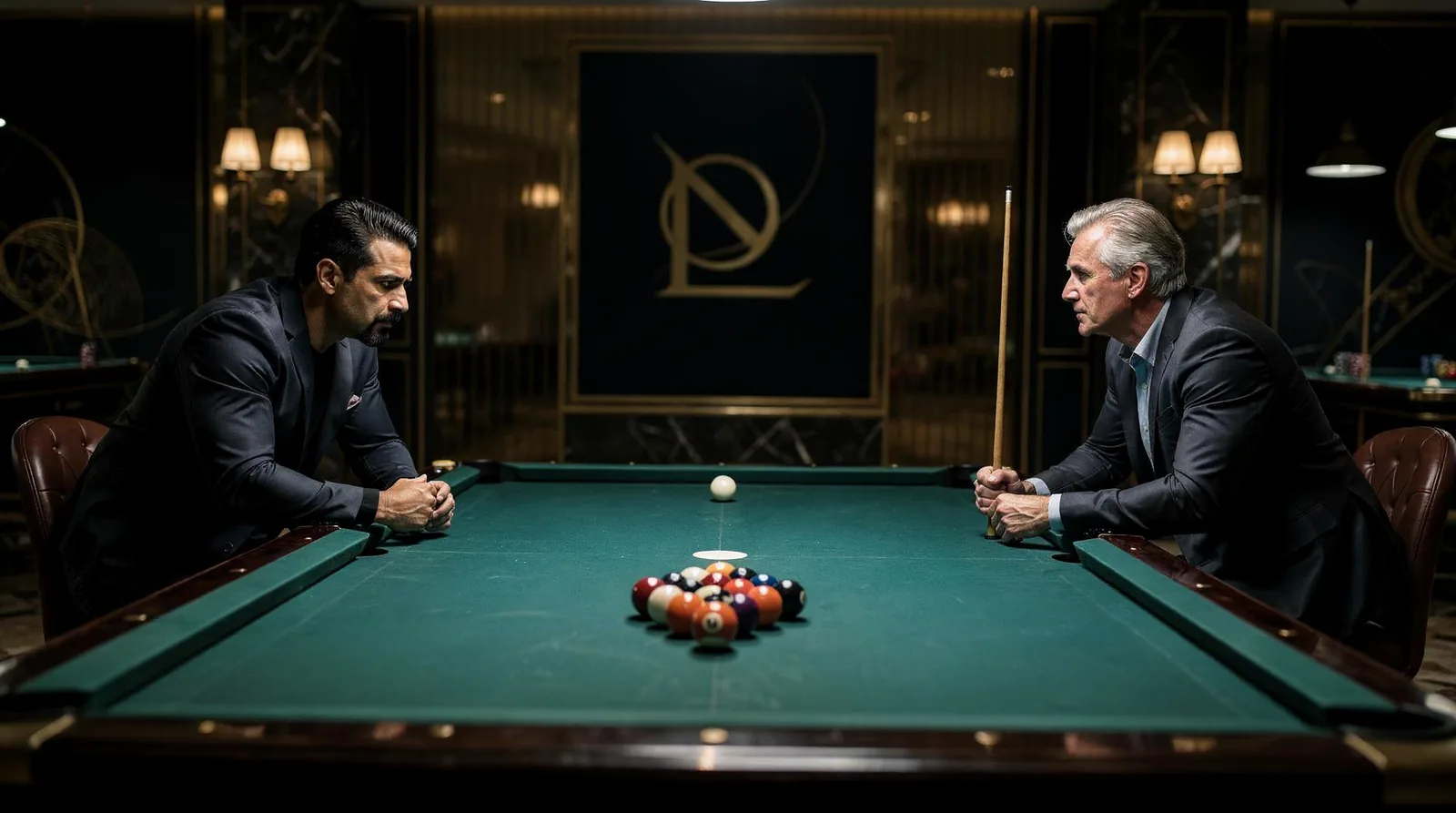
Prestige crime dramas thrive on obsessive rivalry between two masters of a craft. The Hustled builds its entire architecture on that same tension. The Prestige remains the genre's clearest blueprint: two magicians locked in a rivalry so consuming it becomes dangerous. Christopher Nolan himself called the structural puzzle of that film a challenge that took years to solve. The Hustled carries that same architectural ambition across continents rather than a single stage.
The story opens its rivalry structure in Rio de Janeiro, where Cav — a teen outcast turned pro pool mastermind out of Kansas City — squares off against kingpin billionaire Marco. From there, the stakes multiply. The rivalry escalates into a high-stakes, globally televised nine-ball match in Monaco, pitting Cav against Hotel-Casino Versailles owner Gustave LaBlanc.
Is there more than one rival in The Hustled?
Yes. Cav's path runs through two distinct antagonists rather than one continuous nemesis, mirroring how prestige dramas often stack rivalries to raise the ceiling on danger. Marco tests him first in Rio; LaBlanc — backing his prodigy JunJun — tests him last on the world stage.
What raises the emotional stakes beyond the table?
A romantic thread with Esmeralda, sparked in an upscale Rio bar, threads through the danger and ambition. Her presence turns every match into something Cav risks losing beyond money or reputation.
Conclusion
The Hustled is obsession made cinematic — the pull of mastery and the pull of love, tangled together until neither can be untangled. From Kansas City streets to the glittering tables of Monaco, Cav's journey outgrows the pool hall: it's a story about redemption, about tactical brilliance under pressure, and about what a person risks for the ones they love. This is cinema born from lived passion, a story that demands the prestige treatment it deserves. Every break of the cue echoes with consequence. Every frame pulses with the electricity of a life remade through sheer will and artistry.